
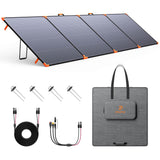
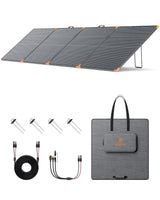
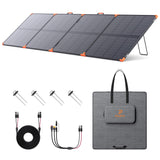
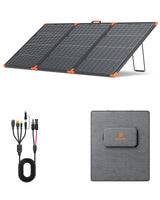
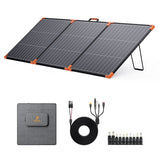
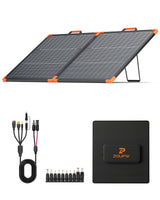
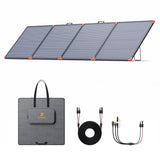
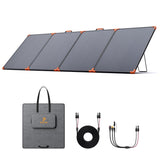
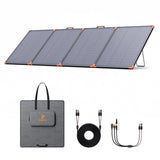
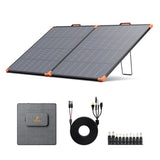
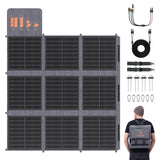
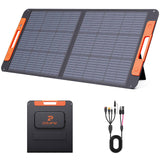
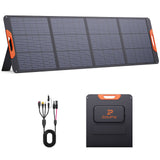
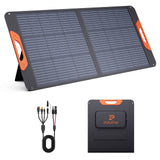
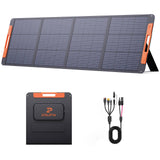
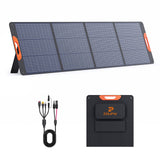
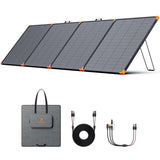
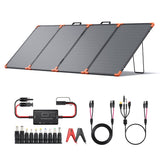
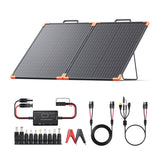
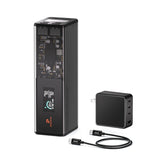
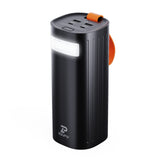

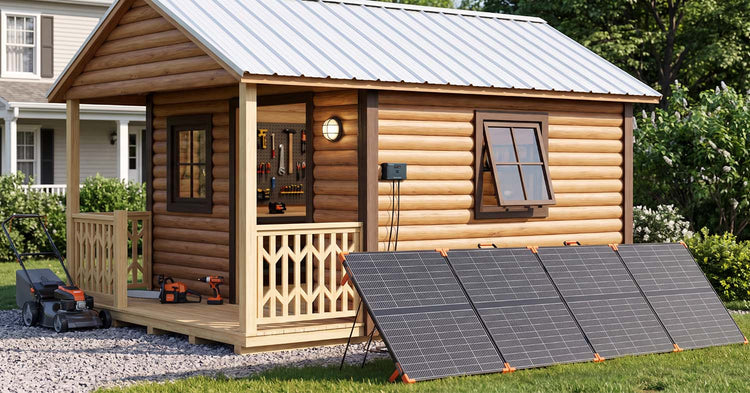
Are ZOUPW Portable Solar Panels Compatible with Anker Solix Power Stations for Off-Grid Cabins?
If you are setting up an off-grid cabin or looking to shave a chunk off your monthly electricity bills, a solid Anker Solix power station is likely already in your shopping cart. But when you start looking for matching solar panels for off grid cabin use, the steep price tag of original brand panels might leave you asking:
Do I really need to buy original brand solar panels? Can I use a more cost-effective, high-efficiency ZOUPW portable solar panel and plug it directly into my Anker unit?
The answer is yes, absolutely, and it is remarkably simple! As long as you understand electrical parameters, daily power calculations, and how to handle heavy loads like cabin water pumps, you can build a reliable off grid cabin solar setup on a much friendlier budget.

Why Are Portable Solar Systems Recommended for Off-Grid Cabins Over Traditional Rooftop Solar?
Worried About Roof Drilling Leaks or High Upfront Costs for Full Off-Grid Power?
Traditional fixed rooftop solar installation is a labor-intensive project that requires certified electricians, local permits, and thousands of dollars upfront. Drilling mounting brackets into a cabin roof also creates significant leak risks during heavy rains or snow.
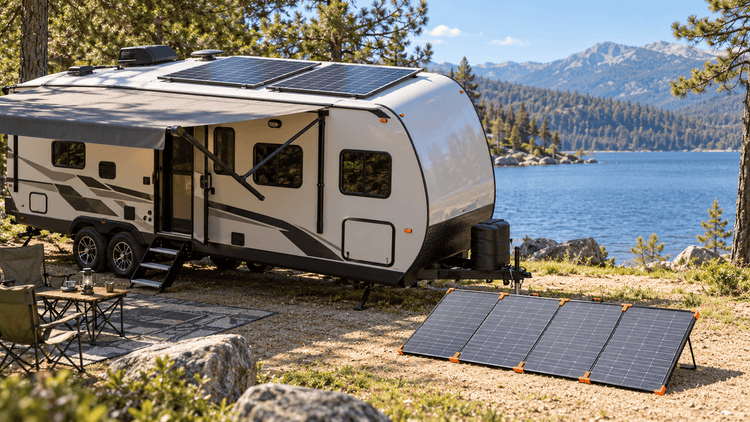
In contrast, a foldable solar panel like ZOUPW offers a zero-damage, drill-free, plug-and-play solution. You don't need to spend tens of thousands of dollars aiming for complete whole-house off-grid power. Instead, adopting a partial power strategy—offloading high-frequency baseline devices like your fridge, Starlink internet router, lighting, and laptops onto the system—lets you easily trim peak electricity costs while keeping essential gear running during storm blackouts.
What If You Only Stay Seasonally or Rent the Cabin?
If your cabin is a weekend getaway, a seasonal hunting lodge, or a rental property, leaving expensive solar installations unattended outdoors isn't ideal. Portable panels offer true plug-and-play mobility. When your trip ends, simply fold the panels down, store them in your trunk alongside your power station, and take them home or use them on your next camping trip. It is the perfect solar panels for small cabin setup.
What Advantages Do ZOUPW Solar Panels Offer?
Why Pay More for the Same Output Performance?
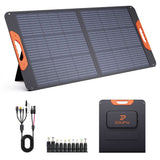
Anker builds top-notch power stations, but their original solar panels carry a high price per watt. For owners seeking budget-smart solar panels for off grid living, ZOUPW delivers exceptional cost-per-watt value. This lets you get higher wattage output for the same budget, creating a punchy solar array to keep your batteries topped off.
How Durable Are ZOUPW Solar Panels for Outdoor Conditions?
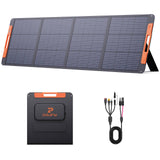
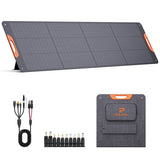
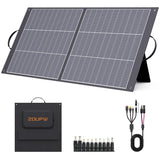
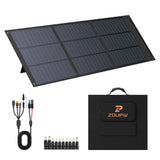
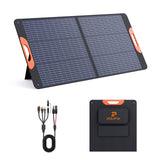
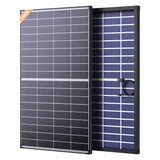
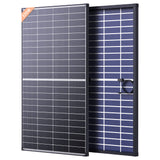
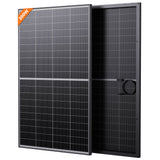
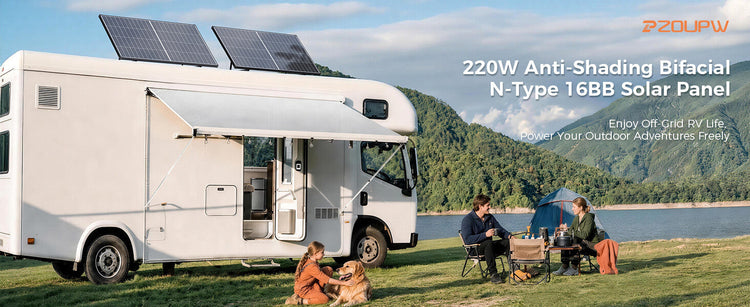
Cabin life puts hardware through tough outdoor conditions. ZOUPW utilizes a high efficiency N-Type solar panel design built with 16BB monocrystalline silicon cells. Encased in an advanced composite or ETFE coating, the panels deliver high light transmittance alongside an IP68 waterproof rating. This surface is scratch-resistant, UV-durable, and handles morning dew, high humidity, or sudden rain showers with ease.
How Do You Verify Compatibility Between ZOUPW Panels and Anker Solix?
What Electrical Parameters and Connectors Matter Before Wiring?
Checking compatibility between a solar panel and a power station comes down to three main details:
Open Circuit Voltage (Voc): The maximum output voltage of the panel when not connected to a load. The total Voc of your solar panels must NEVER exceed the maximum solar input limit of your Anker Solix model.
Operating Current (A): The total current output of your panel array.
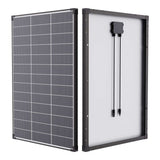
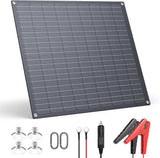
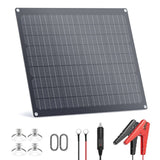
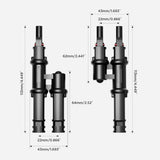
Connectors and Adapters: ZOUPW panels come standard as a solar panel with MC4 connectors. We offer a convenient MC4 to XT60 (or XT60i) adapter cable, easily converting your setup into a solar panel with XT60 connector solution. Simply align the positive and negative MC4 ends until they snap together, then plug the XT60 end into your Anker Solix input port. The process takes less than two minutes with zero electrical background needed.
Good to Know (Safe Current Clipping): If your solar panel array produces more total wattage than your Anker Solix’s maximum input threshold, don't worry about burning out your power station. The built-in MPPT controller in the Anker Solix will automatically perform current clipping, drawing only the maximum power it is rated to take safely.
Which ZOUPW Solar Panel Model Pairs Best with Your Anker Solix?
Here is a quick compatibility matrix matching popular Anker Solix models with ZOUPW panels:
|
Anker Solix Model |
Maximum voltage |
Maximum input power |
Compatible ZOUPW Solar Panel Setup |
|
SOLIX 522
|
11-28V |
100W |
100W |
|
SOLIX C800
|
11-60V |
300W |
300W |
|
SOLIX C300
|
11-28V |
100W |
100W |
|
SOLIX F1500 |
11-30V |
300W |
100W, 180W, 230W |
|
SOLIX S2000 |
11-60V |
400W |
|
|
SOLIX C1000/C1000X SOLIX C1000 Gen 2 Anker Solix C2000X Gen 2 SOLIX C2000 Gen 2 SOLIX S2000 SOLIX F2000 (767) SOLIX F2600 SOLIX F3000 SOLIX F3800 SOLIX F3800 Plus |
11-60V |
500W+ |
What Cabin Appliances Can This ZOUPW + Anker Setup Power?
Can It Keep Essential Cabin Electronics Running Smoothly?
A balanced ZOUPW and Anker setup easily manages essential off-grid electronics, including:
Communications: Starlink satellite systems (50W - 75W) and Wi-Fi routers
Lighting: LED lamp strings and outdoor floodlights (10W - 40W)
Refrigeration: 12V portable compressor fridges or compact household energy-efficient refrigerators (40W - 120W)
Personal Electronics: Laptops, smartphones, cameras, and CPAP medical devices
Can It Safely Start and Power an Off-Grid Cabin Water Pump?
A steady water supply is a top priority for any cabin. Whether running a 12V DC diaphragm pump or a 120V AC shallow well pump, the main technical challenge is handling the inrush current (surge power) when the pump motor turns on.
Understanding Inrush Current: A pump rated at 300W running power can pull 600W to 900W for a split second upon startup.
How the System Handles It: Anker Solix power stations feature strong peak surge suppression, effortlessly handling startup motor spikes without tripping safety overloads. Meanwhile, ZOUPW solar panels continuously recharge the battery bank throughout the daytime, ensuring steady water pressure whenever you open the faucet.
How Many Solar Panels Do I Need for My Cabin?
Step 1: Estimate Your Daily Cabin Energy Consumption (Wh)
Multiply the wattage (W) of each appliance by the hours (h) it runs daily to find your total watt-hour (Wh) consumption:
Calculation Example 1: Weekend Getaway Load
LED Lighting (20W × 5h) = 100Wh
Phone/Laptop Charging = 150Wh
Starlink Satellite Internet (60W × 8h) = 480Wh
12V Portable Fridge (45W running at 30% compressor duty cycle) = 320Wh
Total Daily Energy Consumption: Approx. 1050Wh
Calculation Example 2: Comfortable Part-Time Living Load
Weekend Getaway Load Baseline = 1050Wh
12V Water Pump (100W × 1h total cumulative run time) = 100Wh
Compact Household Refrigerator = 800Wh
Microwave / Coffee Maker (Occasional use) = 300Wh
Total Daily Energy Consumption: Approx. 2250Wh
Step 2: Calculate Required Solar Panel Wattage Based on Sun Hours and Efficiency
Take your daily consumption number and plug it into this simple formula:
Required Solar Panel Wattage (W) = Daily Energy Consumption (Wh) ÷ [Average Peak Sun Hours (4 to 5 hrs) × 80% System Efficiency]
(Note: Multiplying by 80% accounts for real-world environmental variables such as tilt angle offsets, ambient heat loss, and wire resistance.)
For the 1050Wh Weekend Load:
1050Wh ÷ (4.5h × 0.8) = 291W
Panel Setup: 1× ZOUPW 300W panel or 2× 150W/200W panels will achieve a clean "use power today, recharge fully today" cycle.
For the 2250Wh Comfortable Living Load:
2250Wh ÷ (4.5h × 0.8) = 625W
Panel Setup: A ZOUPW 400W array paired with an extra 200W panel (or a 2× 350W/400W combination) ensures fast recharge even during seasons with shorter daylight windows.
What Outdoor Risks Should You Keep in Mind Around the Cabin?
Pack Away During Severe Weather: While the best portable solar panels feature rugged IP68 weather resistance against rain and dew, in severe conditions like hail, heavy downpours, strong gales, or heavy snowstorms, it is recommended to fold your panels up and store them inside the cabin to significantly extend their lifespan.

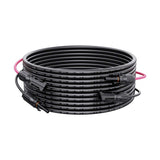
Watch Out for Tree Shade: Cabins are often surrounded by dense trees. Even a shadow from a single small branch across a solar panel can drop output power noticeably. Position panels in open clearings, or tilt them toward the sun using the built-in adjustable kickstands. If tree cover is thick near the cabin, use thick-gauge extension lines (such as 10AWG or 11AWG solar extension cables) to place the panels in open sun further away without noticeable voltage drop.
シェア